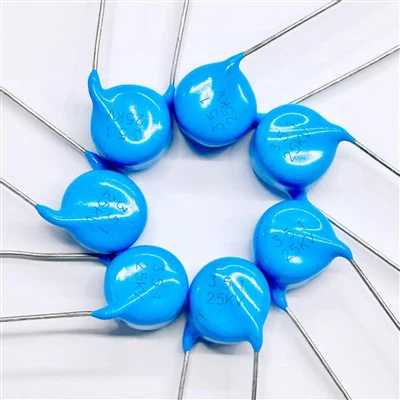
As an indispensable component within the realm of electronics, the primary function of a ceramic capacitor lies in storing electrical charge and facilitating the rapid exchange and regulation of energy within a circuit. Utilizing ceramic material as its dielectric medium, it generates an electric field by accumulating charge between its two electrodes, thereby realizing the capacitive effect. Due to its unique physical and chemical properties, this type of capacitor plays a pivotal role in the field of electronics.
Coupling and Bypassing: In electronic circuits, ceramic capacitors frequently serve as coupling capacitors, transmitting AC signals from one circuit section to another while isolating the DC component, thereby ensuring the integrity of signal transmission. Furthermore, they function as bypass capacitors, providing a low-impedance path for AC signals to minimize signal interference and enhance circuit stability.
Filtering: Ceramic capacitors play a pivotal role in filtering circuits, effectively filtering out high-frequency noise and interference signals within the circuit to produce a smoother and more stable output signal. This is crucial for enhancing the performance and reliability of electronic devices.
Energy Storage and Release: In applications requiring rapid energy discharge-such as flash units, pulsed power systems, and similar scenarios-ceramic capacitors are capable of swiftly storing and releasing substantial amounts of energy, thereby meeting the equipment's demand for instantaneous high power.