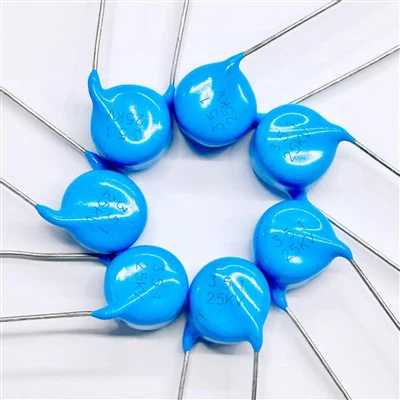
When designing high-voltage circuits, engineers often weigh the pros and cons of different capacitor technologies, and HV ceramic capacitors frequently emerge as a strong contender. Unlike film capacitors, which require larger form factors to achieve the same voltage rating, HV ceramic capacitors are compact and lightweight, making them ideal for space-constrained applications like medical devices and portable test instruments. They also outperform electrolytic capacitors in terms of high-frequency response, with low equivalent series resistance (ESR) that reduces signal loss and heat generation in pulse power supplies. While film capacitors offer higher capacitance values in some cases, their sensitivity to temperature changes and mechanical stress makes them less suitable for harsh environments compared to the rugged SL ceramic design of HV ceramic capacitors.
Another key distinction is reliability over long-term use. Electrolytic capacitors have a limited lifespan due to electrolyte degradation, which can lead to leakage or failure in high-voltage systems. HV ceramic capacitors, however, are solid-state components with no liquid electrolytes, eliminating the risk of leakage or swelling. This makes them a safer choice for applications like power distribution and aerospace, where component failure could have catastrophic consequences. While they may not match the ultra-high capacitance of some specialized capacitors, their balance of voltage resistance, compact size, and long-term reliability makes HV ceramic capacitors the preferred option for most high-voltage electronics designs.