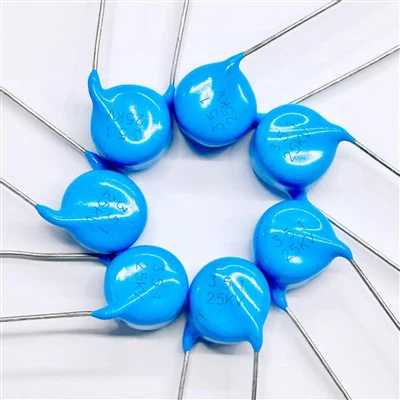
High-voltage ceramic capacitors are indispensable components in contemporary electrical and electronic systems, playing a pivotal role in ensuring the efficient operation of various devices and infrastructure. These capacitors, including bolt-type (screw-type) and leaded high-voltage ceramic capacitors, are employed in an array of applications such as energy storage, filtering, and power regulation. Their primary function is to store electrical energy temporarily and release it as needed, smoothing voltage fluctuations and ensuring stable power delivery in high-demand systems.
The importance of high-voltage ceramic capacitors has increased dramatically as industries seek more energy-efficient and higher-capacity components. These capacitors are essential in powering high-performance electrical systems, particularly as the world continues to embrace renewable energy sources, such as wind and solar power, as well as electric vehicles (EVs) and smart grids. Their ability to operate under extreme voltage conditions, combined with their durability and longevity, makes them a key player in the development of modern power distribution systems.
Market Growth and Trends
The global market for high-voltage ceramic capacitors is experiencing significant expansion, largely driven by the increasing global demand for energy-efficient solutions, as well as the transition towards sustainable energy sources. As more countries invest in renewable energy infrastructure to combat climate change, the need for efficient power systems that can handle higher voltage levels and support energy storage solutions grows. The rising adoption of electric vehicles and the development of smart grids further enhance the demand for high-voltage ceramic capacitors, as these applications require advanced energy management and voltage regulation capabilities.
Another crucial factor driving the growth of the high-voltage ceramic capacitor market is the rise of automation in various sectors. Industries such as manufacturing, robotics, and automotive are increasingly relying on advanced electrical systems that require efficient power control and regulation. High-voltage ceramic capacitors, with their precise and stable performance in demanding conditions, are ideally suited for use in these advanced systems.
Technological Advancements
Technological advancements in capacitor design are also contributing to the market's growth. Modern high-voltage ceramic capacitors are manufactured using advanced ceramic materials with excellent dielectric strength, ensuring that they can function efficiently in high-voltage environments. These materials are resistant to thermal stress, which is crucial for ensuring longevity in applications that experience temperature fluctuations or high power surges.
Bolt-type (screw-type) capacitors, designed for large-scale applications, offer robust performance and are commonly used in high-voltage systems like power transmission and industrial machinery. These capacitors are capable of withstanding immense electrical stress and are often preferred in heavy-duty environments. On the other hand, leaded ceramic capacitors are smaller in size and are used in more compact electronic devices that require high-voltage capacitance in a more space-efficient form. Their ability to perform in confined spaces without compromising electrical performance makes them ideal for integration into various modern technologies.
Another notable development in capacitor technology is the use of capacitor strings. Multiple capacitors are connected in series to handle extremely high voltage levels while maintaining stable performance. This design enables greater flexibility in power transmission systems, ensuring that voltage levels remain consistent across the grid despite fluctuations in demand. Capacitor strings are increasingly being used in energy storage systems and power distribution networks, where high-capacity energy storage and regulation are essential.
Future Outlook
The outlook for the high-voltage ceramic capacitor market remains positive, with continued advancements in energy-efficient technology and the increasing focus on renewable energy integration. As industries across the globe strive for more efficient power solutions, the demand for capacitors that can handle higher voltages, offer extended lifespans, and contribute to energy conservation will only grow.
In conclusion, high-voltage ceramic capacitors are essential to the continued advancement of modern power systems. Their ability to handle extreme voltage levels, coupled with ongoing improvements in capacitor technology, positions them as key components in applications ranging from large-scale industrial systems to compact electronic devices. As the world continues to prioritize sustainability and energy efficiency, these capacitors will play an increasingly important role in the development of reliable, high-performance electrical systems.